
PORON Foam vs Rogers Foam: Technical Parameter Comparison and Selection Guide for Polyurethane and Silicone
Ⅰ. PORON Foam: The Technical Benchmark of Microcellular Polyurethane
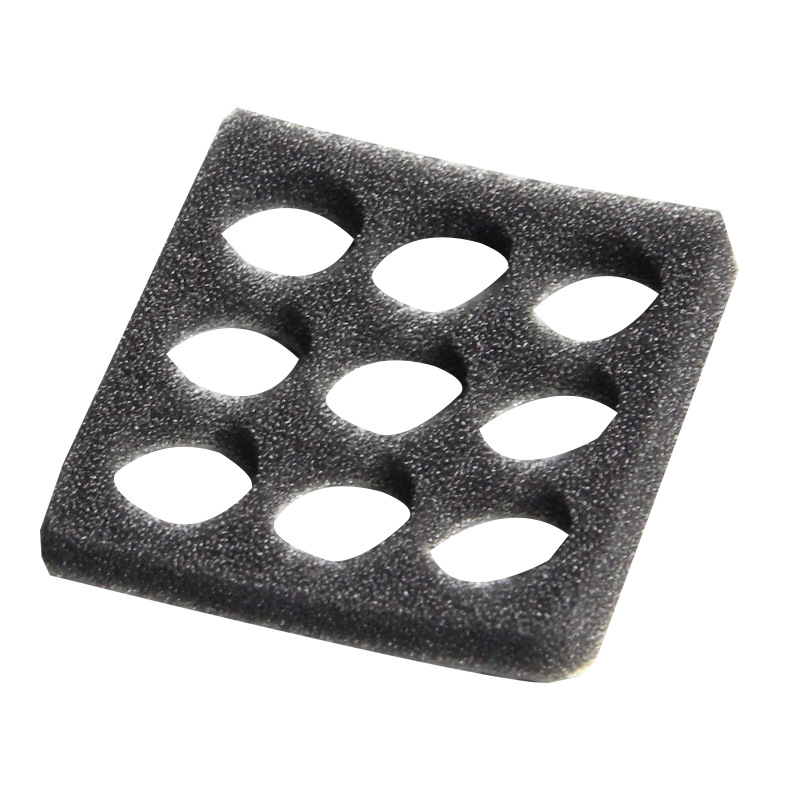
PORON is Rogers Corporation‘s self-developed microcellular polyurethane (PU) foam material, manufactured using a proprietary mechanical foaming process that creates a fine open-cell structure—the microscopic foundation of its core properties. Global production of PORON foam is handled by Rogers Inoac Polymer Materials (Suzhou) Co., Ltd., a joint venture between Rogers Corporation and Japan’s INOAC Corporation. The material establishes its industry leadership through several key technical indicators, the most prominent of which is its exceptional compression set resistance: typical compression set values are controlled below 5%, meaning that even under prolonged repeated compression, the material‘s thickness recovers to over 95% of its original state—far surpassing ordinary polyurethane foams. This characteristic directly translates into long-lasting performance for sealing gaskets and cushion pads throughout the equipment’s service life.
In terms of mechanical properties, PORON foam offers multiple density grades to suit varying load requirements. Typical density ranges from 240 to 400 kg/m³ (15 to 25 lb/ft³), with corresponding compression rebound stress at 25% compression ranging from 42 kPa to 120 kPa according to different specifications. Its excellent compressibility allows it to effectively absorb impact energy and release it slowly, thereby avoiding bottom‑out failure.
Regarding flame retardancy, flame‑rated PORON variants have achieved UL 94 V‑0 certification with siloxane‑free and halogen‑free chemistry, meeting stringent environmental and safety standards—some grades achieve V‑0 rating at thicknesses as low as 3 mm. In environmental resistance, the material demonstrates good chemical resistance to water, medical alcohol, and weak acids/bases (pH 4–10), with no swelling or corrosion; however, it is sensitive to non‑polar solvents such as toluene and gasoline and should be kept away from such exposures.
Additionally, PORON material offers excellent dimensional stability and low outgassing characteristics. It contains no plasticizers, does not corrode adjacent metal parts, and does not become brittle or crack with aging. Thanks to these technical advantages, PORON foam is widely used in precision protection applications including smartphone screen cushion pads, automotive onboard electronic NVH damping, medical device cushioning, and protective gear impact layers.
Ⅱ. The Other Pillar of the Rogers Foam Family: BISCO Silicone Foam
In 1996, Rogers Corporation acquired BISCO, strategically expanding its foam portfolio. BISCO silicone foam is based on a silicone rubber matrix, chemically foamed to form closed‑cell or porous silicone structures, offering performance advantages in weather resistance, wide‑temperature stability, and low stress relaxation that polyurethane foams cannot match.
The core strength of BISCO silicone foam lies in its extreme environment tolerance. Its long‑term operating temperature range spans from -55°C to 200°C, with certain specialized grades capable of even higher limits. This characteristic makes it the sealing material of choice for aerospace, rail transit, outdoor communication equipment, and new energy storage systems. Additionally, the inherent flexibility of silicone materials endows BISCO foam with excellent memory recovery properties and outstanding compression set resistance, enabling it to withstand repeated closure pressures with minimal thickness loss.
BISCO product line offers a complete hardness spectrum from extra‑soft to extra‑firm to meet diverse sealing and cushioning requirements: BF‑1000 extra‑soft silicone foam achieves effective sealing with very low closure force, ideal for light‑load precision electronics; HT‑800 medium‑firm silicone foam combines the lightweight nature of foam with the enhanced sealing capabilities of traditional sponge rubber, excelling in sealing, cushioning, vibration isolation, and thermal management gaskets; HT‑820 firm silicone foam is designed for enclosure sealing applications requiring higher closure force; HT‑840 extra‑firm silicone foam suits heavier load applications; and HT‑870 extra‑soft silicone foam offers effective environmental protection with extremely low closure force while its excellent low stress relaxation and memory recovery significantly reduce maintenance costs caused by gasket failure. In terms of flame certifications, multiple BISCO silicone foam products have passed stringent standards including UL 157, ASTM E162, ASTM E662, and SMP 800‑C for rail flame, smoke and toxicity requirements.
In chemical resistance, BISCO silicone foam shows slightly better tolerance to non‑polar solvents than polyurethane, though prolonged exposure still causes loss of elasticity and should be avoided. In applications such as photovoltaic combiner boxes, HVAC seals, and rail carriage liners that are exposed to outdoor sunlight, rain wash, and repeated thermal cycling, BISCO silicone foam demonstrates significant advantages thanks to its UV resistance, ozone resistance (rated zero cracks per ASTM D‑1171), and no‑staining characteristics (per ASTM D‑925).
Ⅲ. Systematic Selection Logic: Scientific Matching to Avoid Pitfalls
When facing the PORON polyurethane and BISCO silicone product families, following a clear application evaluation logic is essential. Below is a two‑way comparison matrix and selection guide based on engineering data:
(1)Performance Comparison Matrix
| Parameter | PORON Polyurethane Foam | BISCO Silicone Foam |
|---|---|---|
| Material Matrix | Microcellular polyurethane (polyester PU) | Silicone rubber (cellular) |
| Density Range | 240–400 kg/m³ | Low to medium (grade‑dependent) |
| Compression Set | Excellent, < 5% | Excellent, low stress relaxation |
| Operating Temperature | -40°C to 150°C | -55°C to 200°C |
| Flame Rating | UL 94 V‑0, halogen‑free | UL 157, ASTM E162/E662 |
| UV/Weather Resistance | Fair to Good | Excellent (UV/ozone resistant) |
| Polar Solvent Resistance | Good (alcohol, weak acids/bases) | Good |
| Non‑polar Solvent Resistance | Poor (swelling, softening) | Fair (elasticity loss) |
| Siloxane‑free Feature | Available in certain grades | Not applicable |
| Typical Compression Stress (25% compression) | 42–120 kPa | Grade‑dependent (ultra‑low to high) |
(2)Quantitative Selection Matrix by Application Scenario
| Application Scenario | Recommended Material | Key Specification Drivers |
|---|---|---|
| Consumer electronics precision cushioning (phones/tablets) | PORON polyurethane | Die‑cut friendly, UL 94 V‑0, halogen‑free |
| EV battery pack/data center sealing | PORON 40V0 series | UL 94 V‑0, acoustic isolation performance |
| Outdoor electrical/electronic enclosure sealing | BISCO silicone | UV/ozone/rain resistance, wide temperature stability |
| Rail & aerospace interior | BISCO silicone | Stringent smoke/toxicity standards, low stress relaxation |
| Medical rehabilitation devices (pads/protective gear) | PORON Medical grade | Breathable open‑cell, energy absorption, disinfectant tolerance |
Ⅳ. New Direction in Sustainability
In the area of sustainable material development, Rogers Corporation officially launched the new PORON ReSource30 polyurethane material in 2026. This material incorporates recycled industrial content and renewable bio‑based raw materials through an innovative formulation, designed for customers who prioritize sustainability as a core mission. While maintaining the proven reliability and long‑term performance expected of the PORON product portfolio, it introduces a green, low‑carbon direction for the foam materials industry.
Ⅴ. Conclusion
PORON polyurethane foam and BISCO silicone foam are not “substitutes” for one another; rather, they are specialized materials suited to different engineering boundaries. The key to proper selection is to incorporate operating temperature, chemical exposure risk, mechanical load characteristics, and compliance certification requirements into a unified decision-making model. The quantitative comparison data and selection matrices provided herein are intended to help engineers maximize material performance value and economic efficiency in their designs.
PORON Foam vs Rogers Foam: Tec
 How to Choose Thermally Conduc
 Technical Parameter Comparison
 PET Mylar Sheet and Mylar Pape