
PET Mylar Sheet and Mylar Paper – A Comprehensive Application Guide from Appliance Insulation to New Energy
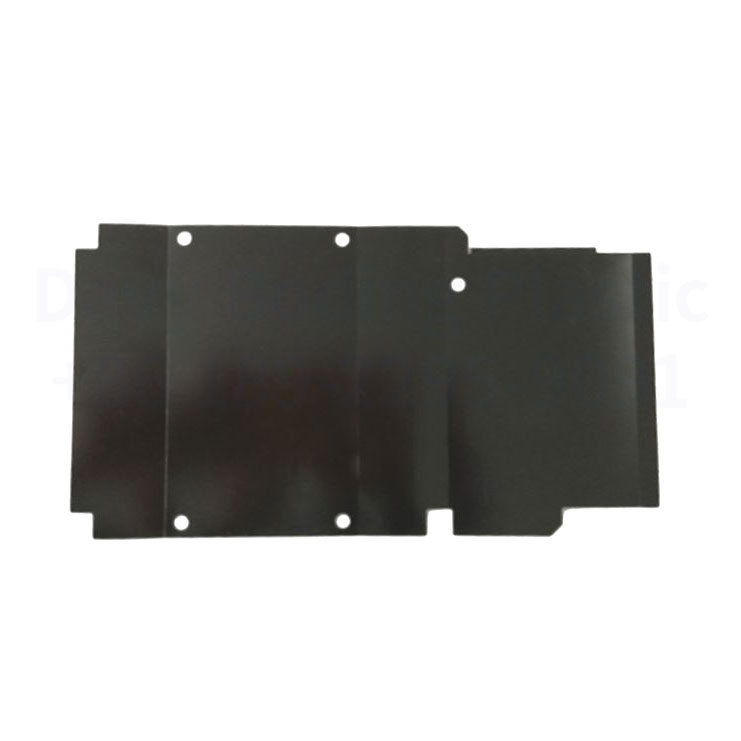
Mylar sheet, this seemingly unassuming PET polyester film material, is quietly supporting the performance foundation of numerous high-end manufacturing sectors from home appliances to new energy vehicles, 5G communications to aerospace. As a key material for electrical insulation, physical isolation, electromagnetic shielding and mechanical protection, PET Mylar sheet has become an indispensable functional film in modern industry. This guide will take you through the core application scenarios, professional processing techniques and cutting-edge trends of Mylar sheet.
1. The Invisible Guardian of Electrical Insulation
In household appliance safety systems, insulation materials are the core barrier blocking leakage current and isolating live parts from accessible surfaces. Mylar specialty films, with high dielectric strength and good temperature resistance covering a long-term service range of -70°C to 130°C, are widely used across numerous industries including home appliances, industrial equipment and renewable energy.
Motor and Transformer Insulation: In built-in motors or transformers of appliances such as air conditioners and refrigerators, Mylar sheet is used for slot insulation, phase insulation and liner insulation of motor windings, effectively preventing short circuits while withstanding temperature rise during motor operation. Melinex M238 polyester film primarily serves the refrigeration equipment industry with insulation class B (130°C), featuring excellent hydrolytic stability and refrigerant chemical resistance, particularly suitable for motor insulation in refrigerator and air conditioner compressors. In sealed environments, this material resists erosion from refrigerants and lubricating oils, avoiding insulation performance degradation. Additionally, Mylar sheet can withstand mechanical stress during motor start/stop while maintaining flexibility, adapting to complex winding structures.
Wire and Cable Insulation: Thin wires inside some appliances use Mylar film wrapping as insulation layers, offering greater flexibility than traditional plastic insulation especially in lightweight, bend-resistant scenarios. WC series PET film is widely used in communication and power output wire and cable insulation layers, and can be laminated with fish paper for electrical insulation applications.
PCB Protection: The control circuit board surfaces of small appliances may be covered with a thin Mylar film, providing dustproof, moisture-proof and basic insulation functions, protecting circuit components from environmental influences. During PCB assembly, Mylar tape is also used for masking protection during soldering or wave soldering processes.
2. Growth Engine in New Energy and EV Sectors
With the acceleration of global energy transition, demand for Mylar sheet in new energy vehicles and energy storage systems is growing rapidly. According to research forecasts, the global Mylar film market is expected to grow at a CAGR of 7.1% from 2025 to 2035, with particularly significant growth in the EV sector.
Battery Pack Insulation: In battery packs of EVs and energy storage systems, Mylar sheet serves as interlayer insulation and cell isolation material, preventing short circuits and isolating battery heat. In pouch lithium batteries, Mylar tape is used for binding between protection boards and cells, providing fixation, insulation and fire protection. Aluminum foil Mylar composite material (made by dry lamination of aluminum foil and PET film) combines aluminum’s high barrier and light-blocking properties with PET Mylar’s puncture resistance, tensile strength and insulation, playing an important role in new energy battery insulation layers—providing reliable electromagnetic shielding while assisting heat dissipation through aluminum’s thermal conductivity, significantly improving battery pack safety.
Drive Motor Insulation: Applied to insulation layers between windings of compact brushless DC motors powering steering assistance. With high dielectric strength, high temperature resistance and mechanical toughness, Mylar sheet ensures long-term reliability of drive motors under frequent start/stop and variable load conditions.
Conductive Shielding Mylar: With the rapid development of 5G communication and EV electronics, demand for high-precision conductive shielding Mylar materials is increasing. Recent research using a vacuum sputtering-electroplating composite process to modify PET substrates has successfully developed conductive shielding Mylar materials with shielding effectiveness of 45 to 50 dB, significantly higher than the 35 dB level of domestic counterparts and comparable to high-end imported materials. The adhesion test results for the modified material reached 4B level with no detachment after 3M tape adhesion, demonstrating excellent adhesion. Additionally, the modified material exhibits good weather resistance with a color difference (ΔE) of only 1.2 after 1000 hours of UVB-313 lamp irradiation.
3. Electronics, Communication and Consumer Electronics
EMI Shielding: In 5G communication modules, smartphones, tablets and other electronic devices, Mylar sheet serves as a key component of EMI shielding materials. Aluminum foil Mylar composite material, with its unique metal+polymer composite design, offers conductivity, flexibility, high temperature resistance and chemical stability, performing excellently in 5G communication modules, power battery packs, medical devices and other scenarios.
Display and Optical Applications: Transparent Mylar sheet offers light transmittance exceeding 90% and serves as substrate material supporting bendable screen development in flexible display technology. In LCD displays, Mylar sheet can be used for light guide plate components and optical film layers. Matte and milky white Mylar sheets offer light diffusion effects, suitable for optical management in LED panels.
Acoustic Applications: Mylar material is used in speaker diaphragm manufacturing, achieving precise response at high frequencies above 20kHz through ultra-thin forming processes (thickness can reach 0.025mm), with overtone decay time controlled within 0.2 milliseconds.
4. Industrial and Specialty Applications
Aluminum Foil Mylar Composite Material: This is a flexible composite membrane made by dry lamination of aluminum foil and PET film, with a typical structure including a 6-12μm high-purity calendered aluminum foil conductive layer, a 25-50μm PET film dielectric layer, an acrylic or silicone adhesive bonding layer, and single/double-sided release paper release layer. This material performs excellently in 5G communication modules, power battery packs, medical devices and other scenarios. According to QY Research forecasts, the global aluminum foil Mylar market is expected to grow at a CAGR of 9.7% from 2023 to 2030, with demand for shielding materials for new energy vehicles growing at 23.5%.
Mylar Paper and Composite Insulation Materials: Mylar sheet can be laminated with fish paper to produce composite insulation materials, widely used in the electrical insulation industry for spacers, barriers, screens and protection in electronics, home appliances, instruments, displays, motor slots, computers and peripheral equipment. Additionally, in NMN composite insulation paper, PET film serves as the middle layer providing excellent electrical insulation performance, enabling NMN insulation paper to withstand voltage and surge impulses during motor operation, ensuring electrical safety, and has been widely applied in low-voltage motors and transformers.
Aerospace Applications: Mylar film coated with aluminum powder can serve as surface protection layer for communication satellites with reflectivity exceeding 85% and UV radiation resistance exceeding 10,000 hours. Aerospace-grade aluminum foil Mylar can also achieve extreme environment applications from -196°C to 200°C, meeting demanding requirements such as satellite communications.
Fluorine-Free Eco-Friendly Mylar Sheet: The new generation of fluorine-free Mylar sheet uses advanced fluorine-free formulation technology, completely avoiding the use of fluorinated chemicals while maintaining traditional Mylar’s excellent properties, containing no PFAS, PFOA, PFOS or other fluorine compounds, halogen-free, low VOC emissions, complying with RoHS, REACH and global electronics environmental standards, particularly suitable for export markets and new energy industry chains with strict environmental requirements. Its operating temperature range reaches -40°C to 180°C with UL94 V-0 flame retardancy and dielectric strength above 200 kV/mm, widely applied in high-end manufacturing fields including new energy battery module insulation, motor winding and slot insulation, aerospace equipment thermal shielding and line protection, and 5G communication equipment EMC shielding.
5. Professional Processing Techniques for Mylar Sheet
Mylar sheet offers good processability and can be fabricated into various shapes and sizes of insulation components through multiple precision processing techniques to meet diverse industry requirements.
Die-Cutting Processing: Die-cutting is one of the most common processing methods for Mylar sheet, suitable for high-volume standardized production. Die-cutting can be performed using steel rule dies, engraved dies, or rotary dies with tolerances reaching ±0.05mm. Aluminum foil Mylar die-cutting requires special attention to three major technical bottlenecks: material delamination control, edge burr elimination and dimensional accuracy maintenance. Laser plus mechanical composite processing is recommended, reducing burr occurrence rates to below 0.3%. High-end products can utilize intelligent die-cutting technology with closed-loop controlled dynamic tension compensation systems controlling unwind tension fluctuations within ±0.5N, reducing material tensile deformation by 80%. After processing, dust removal in Class 100,000 cleanrooms is required with particle control reaching ISO Class 5 standards, along with quality inspection through AOI vision inspection and conductivity testing, achieving automatic rejection rates exceeding 99.8%.
Laser Cutting: Suitable for complex contours and rapid prototyping with no tooling costs, achieving minimum tolerances of ±0.01mm. For high-precision conductive shielding Mylar materials, laser cutting effectively controls heat-affected zone width below 50μm, ensuring cut edge smoothness.
Slitting and Rewinding: Large rolls can be slit to specified widths according to customer requirements, with value-added services including adhesive backing and rewinding. Before slitting, material should be conditioned in temperature and humidity-controlled workshops for 24 hours to eliminate internal stress.
Lamination: Mylar sheet can be laminated with aluminum foil, fish paper, aramid paper and other materials to produce various composite insulation materials. Aluminum foil Mylar is produced through dry lamination, with structure including aluminum foil conductive layer, PET film dielectric layer, adhesive bonding layer and release film layer. Lamination with fish paper enhances insulation effectiveness for electrical insulation applications.
Screen Printing and Adhesive Backing: Screen printing or adhesive backing can be applied to Mylar sheet surfaces for product identification and installation fixation. Adhesive backing supports hot-melt adhesives, solvent-based adhesives and specialty double-sided tapes from brands such as 3M and Nitto, offering strong adhesion with excellent temperature and weather resistance.
6. Quality Certifications and Environmental Compliance
High-quality Mylar sheet products should pass multiple quality certifications. For flame retardancy safety: UL 94 V-0 or VTM-2 certification. For environmental compliance: RoHS, REACH, SGS environmental testing, with fluorine-free Mylar sheet also meeting PFAS-Free standards, containing no fluorine compounds, halogen-free with low VOC emissions. For electrical performance: IEC 60674 compliance. For production systems: ISO 9001 quality management system certification. Most professional manufacturers provide 5 to 10 years of product quality warranty.
7. Value Proposition of Choosing Mylar Sheet
Choosing high-quality Mylar sheet means choosing reliability and performance assurance verified by decades of engineering practice. From basic insulation protection of home appliances to safety isolation of EV battery packs, and EMI shielding of 5G communication equipment, Mylar sheet serves every aspect of modern industry with its excellent comprehensive performance. With increasingly stringent environmental regulations and continuously expanding emerging application fields, innovative products such as fluorine-free Mylar sheet and conductive shielding Mylar sheet are bringing more possibilities to the industry. According to market forecasts, the global Mylar film market is expected to grow at a CAGR of 7.1% from 2025 to 2035, reaching a market size of USD 5.5 billion by 2035, demonstrating strong growth momentum.
 PORON Foam vs Rogers Foam: Tec
 How to Choose Thermally Conduc
 Technical Parameter Comparison
PET Mylar Sheet and Mylar Pape
Technical Parameter Comparison
PET Mylar Sheet and Mylar Pape